


Kingfisher
By the time I saw my first Kingfisher, aged ten, it was already an object of desire, fuelled by a sense of injustice and envy. I had been with or close to my brother on three occasions when he had seen one but, on each occasion, it had already vanished by the time I joined him.
I listened jealously to tales from people who had been more lucky than me. “All I saw was a blue flash of light.” “They change colour depending on how the light catches them.” “No painting can capture that shade of blue.”
The morning after the last near miss, we returned to the same spot in the grounds of Monk Fryston Hall near Selby in Yorkshire to try again. Again, I was with my mam on the opposite side of the bridge to my dad and brother when we were alerted by an unfamiliar whistling bird call. Then it was there, streaking away along the river directly towards the low morning sun, its blue light searing into our retinas and rendering us speechless.
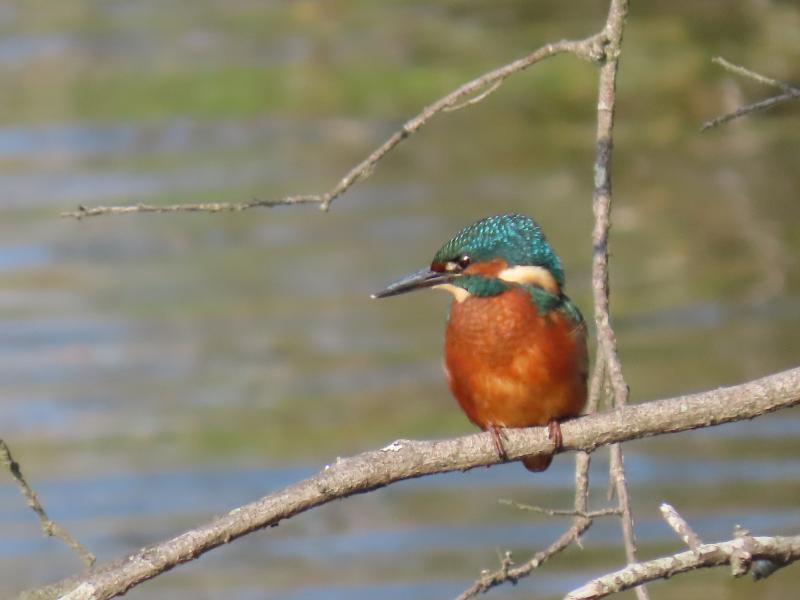
I am lucky to live near at least one breeding pair of Kingfishers near Stocker’s Lake, but despite many encounters, I struggled for some time to get a decent photograph. Finally, the same male (as told by its all-black bill) obliged on three consecutive walks, culminating in great views and a series of ever-improving photographs.
The bird turned around to show its brilliant orange front, and in this picture you can even see the fused toes on its small, red feet.
Where to see Kingfishers
Kingfishers can be seen along rivers and canals and by lakes throughout England and Wales, and they have become more widespread in recent years in Scotland. They have a remarkably large global distribution, extending through Asia all the way to Japan. Numbers fluctuate with hard winters, and during prolonged spells of freezing weather, many Kingfishers move to coastal areas.